
AI Summary
Table of Contents:
Introduction
1. Define Your Objectives Before Selecting Catering for Board Meetings in Toronto
2. Choose the Right Catering Format for Your Boardroom Environment
3. What Food Is Appropriate for a Board Meeting That Support Productivity
4. Design a Boardroom Catering Schedule That Matches Meeting Flow
5. How to Set Up Catering in a Boardroom Without Interrupting Discussion
6. What Dietary Needs Executives Have and How to Plan Menus Around Them
7. Match Catering Style to Different Executive Meeting Formats
8. Include Local Toronto Considerations When Booking Boardroom Catering
Work With a Corporate Catering Partner That Understands Boardroom Expectations
FInal Thoughts
Frequently Asked Questions
Board meetings are very different from a regular office lunch. People are moving through presentations, discussions, decisions and packed schedules, so food must fit into that flow instead of becoming a distraction.
Executives, leadership teams and clients expect catering that feels professional, well-organized plus convenient to enjoy without disrupting the meeting. This is the reason planning catering for board meetings in Toronto needs more proper thinking than placing a quick lunch order.
For example,
If your meeting is in Toronto Financial District around Bay Street or inside busy office spaces like Brookfield Place, timing and setup matter as much as the menu itself. Nobody wants late deliveries taking over the boardroom table.
Even with Toronto’s hot summer days, lighter meals with refreshing options work better than heavy lunches.
In this blog, you will know about practical boardroom catering formats, menu ideas, dietary planning and local tips that make executive meetings run more smoothly.
1. Define Your Objectives Before Selecting Catering for Board Meetings in Toronto
Before choosing menus, decide what the purpose of the meeting is. It is important to know this because food should be the part of the meeting rather than being the entire motive of the meeting.
There are several questions, such as:
- Is this a decision-making session?
- Is the meeting client-facing?
- Will executives stay in the room throughout?
- Is discussion confidential?
- Is food expected to be quick or more premium?
As different meetings require different catering styles. Some of the examples are:
Quarterly board meetings: Work well with scheduled meal breaks plus menu presentation.
Investor meetings: Benefit from individually packaged executive meals.
Leadership planning sessions: Need ongoing refreshments with lighter meals.
Long strategy meetings: Require multiple food touchpoints to maintain energy.
When objectives are clear ordering becomes easier and waste decreases.
2. Choose the Right Catering Format for Your Boardroom Environment
The right catering format matters just as much as the menu. Here are common options for catering for board meetings that Toronto offices can choose:
Executive Breakfast Catering
Ideal for morning meetings. You can get:
- Bagels
- Egg breakfasts
- Fresh fruit
- Coffee stations
Individually Packaged Executive Meals
Meals stay organized and dietary labels remain clear. These are good for:
- Formal discussions
- Confidential meetings
- Faster distribution
Continuous Refresh Catering
Works best for meetings lasting more than three hours. It include:
- Coffee refreshes
- Water stations
- Healthy snacks
- Light desserts
Premium Lunch Service
Balanced meals create a more wonderful experience. They are best for:
- Client meetings
- Executive reviews
- Leadership sessions
Gist: Most companies now lean toward boxed or individually packaged options. It keeps the table clean and the meeting moving.
3. What Food Is Appropria te for a Board Meeting That Support Productivity
Heavy food slows people down and boardroom catering should support focus as well as concentration. Thus, during Toronto’s summer hot days, lighter meals and hydration stations work better than heavier hot lunches. It is preferred to include these choices, like
- Lean proteins like grilled chicken, salmon, or plant-based bowls
- Whole-grain options instead of refined carbs
- Fresh salads and vegetable-forward sides
- Light sandwiches or wraps that are easy to eat between talking points
For teams wanting healthier office meals, menus inspired by partners like Harvest Clean Eats, Mad Radish, Café Landwer and Naan Kabob can help balance variety with practicality.
| Looking for a simpler way to organize executive meals? Nüu Catering helps Toronto teams in creating boardroom menus with flexible restaurant options, reliable delivery and executive-friendly selections that keep meetings running smoothly. |
4. Design a Boardroom Catering Schedule That Matches Meeting Flow
Catering should always be on time rather than interrupting the meetings. As timings change the entire experience, food arriving at the wrong moment is very difficult to manage.
A simple sample executive catering timeline may look like this:
8:30 AM: Catering setup
9:00 AM: Meeting starts
10:30 AM: Coffee refresh
12:00 PM: Lunch service
2:00 PM: Beverage refill
3:00 PM: Meeting wrap-up
You can also go for half-day meetings that serve a light breakfast, a coffee refresh and lunch during a planned break. For full-day sessions, you can add a short afternoon snack break to help maintain energy and focus.
5. How to Set Up Catering in a Boardroom Without Interrupting Discussion
A well-planned boardroom catering setup keeps meetings organized and helps discussions continue without interruptions. Follow these simple rules:
- Separate beverages from meals
- Leave clear movement paths
- Avoid opening packaging during discussion
- Schedule replenishment during breaks
- Place food at the back/side of the room
- Keep the main table clear for laptops as well as documents
- Use individually boxed meals or pre-portioned plates
- Reduce noise from serving plus movement
- Arrange delivery before the meeting begins
- Choose quick and quiet setup
- Focus on smooth service without interruptions
If your office is inside busy business districts such as the Toronto Financial District or Bay Street towers, confirm elevator timing and building access before delivery.
6. What Dietary Needs Executives Have and How to Plan Menus Around Them
Many planners ask, What dietary needs do executives have today? It is best to include mixed preferences, like
- Vegetarian
- Vegan
- Halal
- Gluten-sensitive
- Dairy-free
- Higher protein meals
- Lower-carb meals
Label everything clearly as a small card or tag next to each box; it saves time plus avoids awkward questions mid-meeting.
Key Takeaway: Ask attendees about their dietary needs when you send the calendar invite, not the morning of the meeting. It gives your caterer enough lead time to source the right ingredients.
7. Match Catering Style to Different Executive Meeting Formats
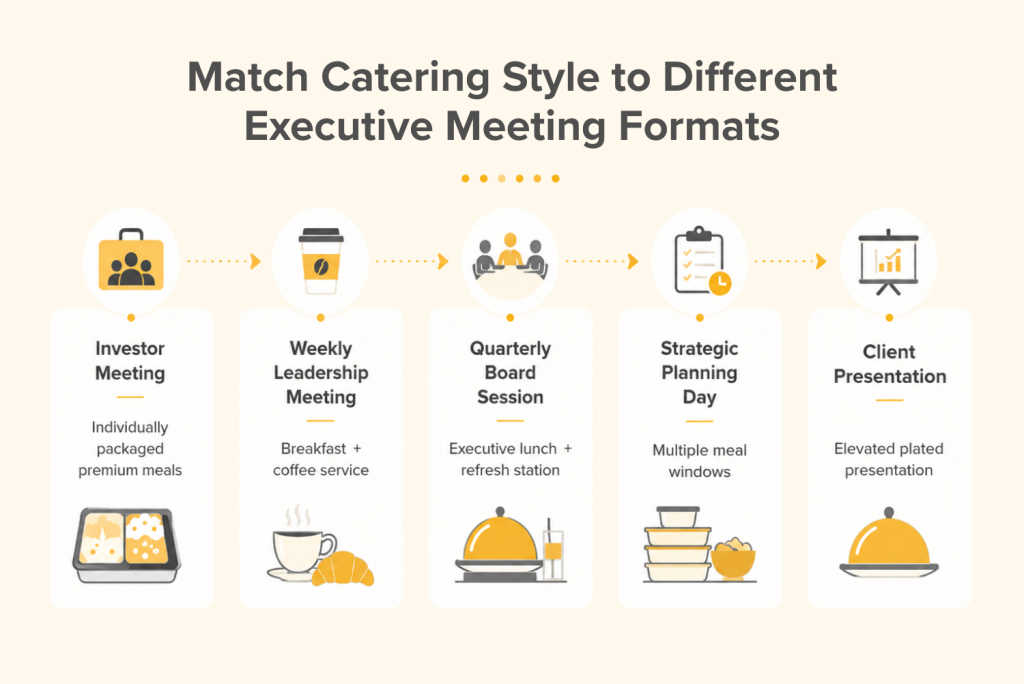
Not every board meeting should look the same. Use this simple format guide:
Investor Meeting
→ Individually packaged premium meals
Weekly Leadership Meeting
→ Breakfast + coffee service
Quarterly Board Session
→ Executive lunch + refresh station
Strategic Planning Day
→ Multiple meal windows
Client Presentation
→ Elevated plated presentation
8. Include Local Toronto Considerations When Booking Boardroom Catering
Toronto businesses require catering that fits fast-paced schedules, office logistics and professional meeting expectations. Offices in busy business hubs like First Canadian Place, King Street West or the Entertainment District have extra security checks with elevator wait times.
This can slow down delivery, so always ask your caterer to arrive a little early and confirm building access in advance. Even local food brands can make a difference too. Options like Café Landwer and Harvest Clean Eats add a local Toronto touch that visiting directors remember.
The season matters as well. Toronto’s hot summer days want lighter menus that work better, so cold brew, iced tea, fruit platters, grain bowls and fresh salads are preferred instead of heavy hot meals. In winter warm soups, hot coffee, breakfast sandwiches and heartier boxed lunches help keep the room comfortable during cold mornings and longer meetings.
Work With a Corporate Catering Partner That Understands Boardroom Expectations
Boardroom catering is not the same as a casual office lunch. It needs quiet delivery, clear labeling and a menu that fulfills every dietary requirement.
This is where Nüu Catering fits in. We work with a curated network of restaurants across Toronto and the GTA, from the Financial District to Bay Street and beyond, so your board meeting menu comes from trusted partners rather than a guess.
You can manage dietary needs, collect meal preferences and receive one organized delivery with clear labels. This helps avoid last-minute confusion about orders or dietary restrictions.
Therefore, good catering feels effortless as the right setup allows leadership teams to focus on discussion instead of logistics.
| Testimonials Ordered from here for a team lunch and everything was perfect! Easy and simple process. — Tzeni Pit Had the best experience working with the team at NUU. They catered to all our needs, their communication was professional and attentive. Will definitely be using them again! — Maisam El-Wazani |
Final Thoughts
Successful catering for board meetings in Toronto is about creating a smooth as well as professional experience. With the right menu, timing, setup and attention to dietary needs, meetings can stay focused plus productive. When catering is planned well, teams spend less time managing logistics and more time making decisions.
Organizing an upcoming board meeting?
Nüu Catering helps streamline executive meal planning with curated menus, smooth coordination, and dependable service throughout Toronto.
Frequently Asked Questions
Q. What are common catering mistakes during executive meetings?
Common mistakes include ordering heavy meals, scheduling delivery too late, ignoring dietary preferences and placing food directly on the boardroom table.
Q. How do companies manage dietary restrictions during meetings in 2026?
Most companies collect dietary preferences in advance and use individually labeled meals to reduce confusion by supporting different food requirements.
Q. Should board meetings have plated meals or self-service?
It depends on the meeting format. Formal executive sessions benefit from plated or individually packaged meals, while longer internal meetings may work better with flexible refresh stations.