Introduction
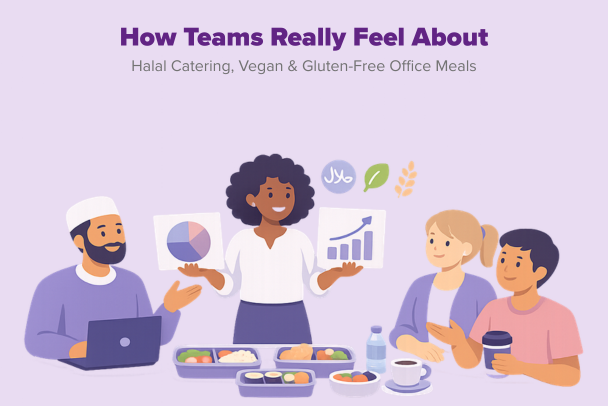
I don’t know about you, but every time I walk into our office lunchroom in Canada, I notice one thing: food isn’t just fuel anymore. It’s a way we show each other we care. That little gesture of including someone’s dietary needs? It says, “You belong here.”
I have observed that people now consider halal catering and vegan meal options and gluten-free meals as essential components of their dining needs after witnessing their dining needs evolve throughout the years. Employees become aware when employers disregard their basic requirements. Employees require more than food because they want to be recognized as individuals.
I will explain to you how teams perceive their dining experiences at work, why dietary restrictions matter and how an inclusive menu will positively affect team spirit.
Food at Work Is Never “Just Food”
Office catering followed a predictable routine, which included sandwich platters and pizza boxes and occasional salad trays for several years. Convenient? Yes. Inclusive? Not always.
Modern teams consist of individuals who bring various cultural traditions and religious beliefs and different lifestyle choices to their work. Some people follow halal dietary restrictions. Others choose vegan meals for ethical or environmental reasons. Many people need to avoid certain foods because they have gluten intolerance or food allergies. Employees can feel overlooked when office meals fail to represent their actual needs, as their needs are not being met.
Food serves as a strong symbol of respect and belonging in Canadian workplaces because our national identity embraces multiculturalism.
What Employees Say About Halal Catering (When You Actually Ask)
Here’s what many team members quietly think but don’t always say out loud:
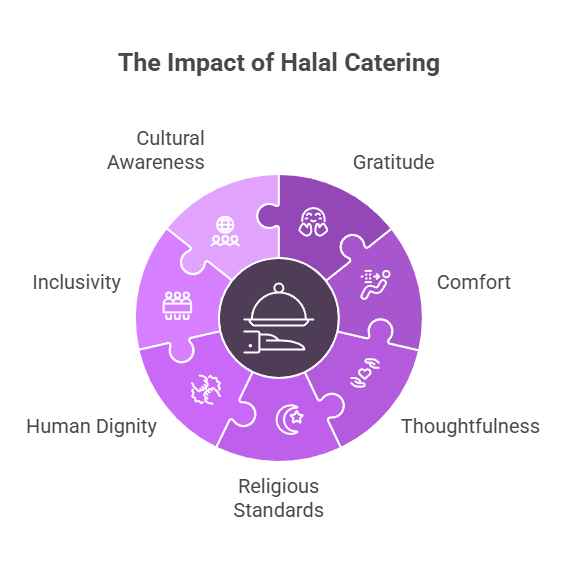
- “I’m grateful when I don’t have to ask if something is halal.”
- “It feels nice when I can eat without explaining my beliefs.”
- “When halal catering is included, it shows thoughtfulness.”
Halal catering does more than meet religious standards, which include meeting religious standards and preserving human dignity. Muslim employees are able to participate comfortably in team lunches and celebrations and corporate events because halal meals are served with clear labels and proper preparation methods.
In Canadian workplaces, halal food options serve as evidence that organizational leaders demonstrate cultural awareness that extends beyond basic diversity initiatives.
Vegan Meal Options: More Than a Trend
There’s a common misconception that vegan meal options serve only a small group of people that has persisted until today. Employees select plant-based dietary options because they value their health and sustainability, religious beliefs and personal principles.
Teams show their appreciation for vegan meals when the following conditions exist:
- Clearly labelled, not treated as an afterthought
- Nutritious, filling, and full of flavour
- Included on the main menu, not offered as backups
Employees don’t want a sad side salad while everyone else enjoys a full meal. The design of vegan meal options establishes equal treatment between people who follow vegetarian diets and those who need special dietary accommodations.
Gluten-Free Isn’t a Preference—It’s a Necessity
Employees who suffer from celiac disease or gluten sensitivity require specific food options that must remain constant. The office gluten-free meals face misunderstood because people treat them without appropriate seriousness which creates health dangers and discomfort for others.
The teams prefer to work with a catering service that demonstrates expertise in handling dietary restrictions and cross-contamination possibilities and provides understandable food labels. Employees can eat shared meals without health concerns when proper gluten-free options are implemented. The ability to trust someone grows stronger when they experience peace of mind.
The Emotional Impact of an Inclusive Menu
An inclusive menu creates a powerful social impact because it eliminates all social barriers between people.
When everyone at the table can eat comfortably:
- Conversations flow more naturally
- Team bonding feels genuine
- No one feels singled out or “different”
Employees often describe inclusive catering as:
- Thoughtful
- Respectful
- Surprisingly motivating
The employer recognizes workers as complete human beings instead of just their professional titles.
Why Canadian Workplaces Are Rethinking Office Catering?
Companies throughout North America, especially Canadian firms, create new definitions for workplace wellness programs. The program now includes more than traditional mental health days and benefits packages. The program encompasses all daily activities, which include lunch gatherings and work-related festivities. Progressive organizations understand that:
- Food choices impact employee mood
- Employee retention rates increase through inclusive practices
- Small acts of kindness create enduring effects on others
The requirement for catering to dietary needs and cultural food preferences in Canada represents an automatic progression that supports equity and inclusion standards.
Where Professional Halal Catering Makes the Difference?
Experienced catering partners make a significant difference in catering services.
A professional halal catering provider uses their expertise to create special menus that require both cultural knowledge and operational planning. They ensure:
- Authentic halal preparation methods
- Balanced vegan meal options
- Safe gluten-free practices
- Clear communication and labelling
At Nuu Catering, this philosophy is central. Their corporate catering service emphasizes food delivery systems because they want to understand how different foods impact employees’ workplace experiences. Their specially designed inclusive menus help businesses establish social connections while preventing social exclusion.
Office Meals as a Reflection of Company Values
Employees recognize patterns that they observe. The message becomes incomplete when inclusivity exists in hiring practices yet fails to appear during lunch activities.
The practice of including halal catering and vegan meal options together with dietary restriction awareness in regular office meals creates a consistent office environment that shows care for employees.
Food serves as a silent brand ambassador that promotes your organization’s core values.
The Business Case for Inclusive Catering
Beyond emotion, there exists a second aspect that requires examination:
- Higher employee satisfaction
- Stronger team engagement
- Reduced catering waste (when everyone can eat)
- Positive employer branding
Organizations that adopt inclusive food policies experience lower costs than they estimated while achieving greater benefits than they anticipated. Teams don’t ask for perfection; they ask for consideration.
The Future of Office Catering in Canada
The importance of shared meals will increase as hybrid work patterns develop and companies require their employees to spend specific time periods at their offices. People expect those moments to feel worthwhile from their shared experiences, which they encounter when they come together.
The goal of inclusive catering extends beyond meeting requirements, establishing a space where individuals can authentically express their true selves. The process begins with a basic yet impactful element, which happens to be lunch.
Wrapping It Up
Food serves as the primary method through which humans establish connections with each other. The workplace environment uses food as a means to either create distance or establish closer relationships among employees. Halal catering, together with satisfying vegan options and dietary restriction compliance, shows that organizations want to display their respect for all employees. You’re seen. You’re valued. You belong.
If you’re ready to create office meals that reflect the diversity and heart of your team, Nuu Catering is here to help. Thoughtful menus, inclusive planning, and care in every detail, because great teams deserve food that brings everyone together. So why wait? Explore our website and connect with us now.
FAQs about How Teams Really Feel About Halal Catering, Vegan & Gluten-Free Office Meals
1. Are vegan meal options only for vegan employees?
No. It provides vegan meal options to all employees who require dietary accommodations, those who choose veganism and those who practice sustainable eating habits.
2. How should a dietary restriction be handled in office catering?
Office catering needs to handle dietary restrictions through three essential elements which include correct food labelling, secure food preparation methods and caterers who possess expertise in dietary requirement management.
3. What defines an effective inclusive menu?
An effective inclusive menu defines itself through its provision of halal, vegan and gluten-free dining options which deliver equal taste and carefully crafted meals.
4. Can inclusive catering improve employee morale?
Yes. When employees receive recognition for their dietary preferences through food options, they experience a sense of being important to the organization.
5. Will halal catering be relevant for hybrid offices in 2026?
The hybrid office environment will require halal catering services to maintain their importance throughout the year 2026. The hybrid office will use inclusive catering services on in-office days, which will create a comfortable workspace environment that values all team members.
6. What will employees expect from caterers in 2026?
The year 2026 will see employees demanding that catering services learn halal standards, vegan cooking methods and dietary restrictions which must be conveyed only once without any need for last-minute changes.
7. Why will professional halal catering matter more in 2026?
The diverse teams at organisations rely on professional halal catering services to deliver consistent results while adhering to regulations and building trust with others, as these services eliminate doubt and foster better workplace interactions.
8. Can inclusive menus simplify catering planning?
Yes. The use of planned inclusive menus reduces the need for emergency orders and last-minute changes, along with multiple adjustments, resulting in time savings for both HR personnel and office managers.