

AI Summary
⏳ 8 min read
Planning a corporate event can feel easy in the beginning. But once you start, many things come to notice. With summer at its peak from June to August in Toronto, it is one of the busiest seasons for corporate events in the city.
Venues from Brookfield Place to event spaces along King Street West and Queen’s Quay are booked, and caterers across the Financial District are getting more requests than any other time of year. If you have planned an office event before, you have faced some of these situations:
A simple corporate catering brief can make things much easier. When you provide clear details upfront, caterers can recommend the right menu options, accommodate dietary needs and give you more accurate pricing. In this blog, we will cover what to include in a catering brief, how to communicate dietary needs upfront and what information a caterer needs to give an accurate quote.
What Is a Corporate Catering Brief?
A corporate catering brief is a document that outlines all the important details about your event before you contact a caterer. It acts as a roadmap for your catering partner — telling them what type of event you are hosting, how many people will attend, what food you need and any special requirements.
Key Takeaway
The more detailed your brief is, the easier it becomes for everyone to understand your needs.
Why Sending a Detailed Catering Brief Saves Time and Money
When a caterer does not have the full picture, they ask a lot of follow-up questions or make assumptions that go wrong fast. A detailed brief solves this.
Faster Responses
Caterers respond quicker with all details in hand
Accurate Pricing
No guesswork – quotes match your actual needs
Fewer Changes
Fewer last-minute revisions and surprises on the day
Better Communication
Clear planning throughout the entire process
What to Include in a Corporate Catering Brief Before Contacting a Caterer
These are the most important details to have ready:
Event Type and Purpose
Explain what kind of event you are hosting. Options include: team lunch, board meeting, client presentation, product launch, training session, holiday party or employee appreciation event.
Event Date, Time and Duration
Provide the event date, start time, end time, service time, setup window and breakdown time. Timing affects food preparation, staffing and delivery logistics across Toronto‘s busy summer streets.
Expected Guest Count
Provide confirmed attendees, estimated attendees and buffer numbers. Guest count affects food portions, staffing levels, equipment requirements and overall pricing.
Venue Information
Include venue name, address, parking availability, loading access, elevator access and kitchen facilities. Whether your event is at a Spadina Avenue office tower, Liberty Village or King Street, venue details make coordination easier.
Preferred Meal Format
Tell the caterer how you would like food to be served. Options include: individually boxed meals, buffet service, plated meals, cocktail-style catering, grazing tables, breakfast catering or snack stations.
Budget Expectations
Include your budget per person, total event budget and whether it is flexible or fixed. Budget information helps caterers suggest realistic menu options and avoid unnecessary revisions.
Dietary Requirements and Food Preferences
Include vegetarian, vegan, halal, gluten-free, dairy-free, nut allergy and religious dietary requirements. Providing this information early helps caterers prepare a suitable menu for everyone.
Beverage Requirements
Let your caterer know if you need coffee service, tea stations, soft drinks, juice, water stations or specialty beverages. During Toronto’s summer months, cold beverage options are very important.
Equipment and Staffing Needs
Some events require serving tables, chafing dishes, linens, disposable or reusable tableware, event attendants and servers. This information helps caterers calculate staffing and equipment costs accurately.
Special Requests and Event Goals
Include company branding opportunities, sustainable packaging, eco-friendly solutions, VIP meals, presentation preferences and flexibility for last-minute adjustments.
Ready to plan your corporate event?
Browse Nuu’s corporate catering options – inclusive menus, reliable delivery, transparent pricing.
What Information a Caterer Needs to Give an Accurate Quote
Many offices ask for pricing before providing enough details. Without full information, quotes are guesswork rather than accurate proposals. The more complete your brief, the more precise the quote.
How to Communicate Dietary Needs Upfront Without Confusion
Managing dietary requirements is an important part of event planning. Collect them through RSVP forms, employee surveys or event registration platforms, then organise the information in a simple table:
A clear breakdown helps caterers plan menus accurately, accommodate special requests and provide a more accurate quote.
Common Mistakes to Avoid When Writing a Catering Brief
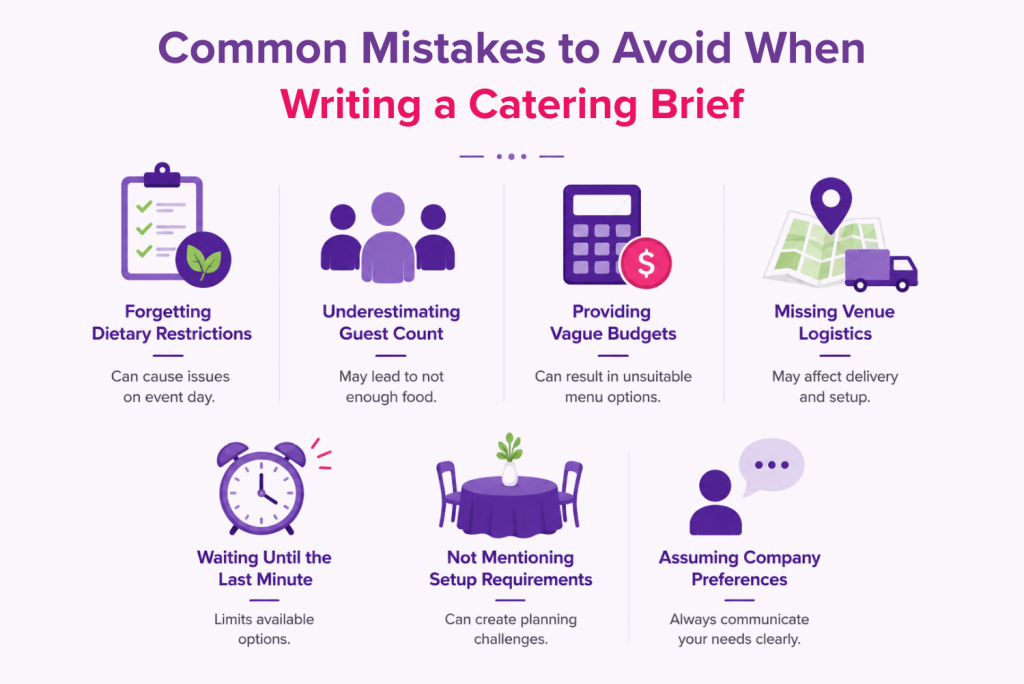
Forgetting Dietary Restrictions
Can cause serious issues on event day.
Underestimating Guest Count
May lead to not enough food for attendees.
Providing Vague Budgets
Can result in unsuitable menu options being proposed.
Missing Venue Logistics
May affect delivery, setup and overall planning.
Waiting Until the Last Minute
Limits available options, especially during Toronto’s busy summer season.
Not Mentioning Setup Requirements
Can create last-minute planning challenges for the caterer.
Assuming Company Preferences
Always communicate your needs clearly – never assume the caterer will guess correctly.
Corporate Catering Brief Template
Creating a clear and organized catering brief does not have to be complicated. Use this template as a starting point – it covers all the details most caterers need.
Why Toronto Businesses Choose Nuu Catering for Corporate Catering
Nuu Catering has worked with businesses of all sizes – from intimate team lunches at Liberty Village offices to large company-wide events. By working with popular Toronto restaurants like Azul, Mevame, Osmow’s Shawarma and Lambretta Pizzeria, we offer a wide range of food options that accommodate different tastes and dietary preferences while bringing some of Toronto’s favourite flavours directly to the workplace.
Clear communication from the start: No confusing quotes, no hidden fees.
Menu flexibility: We work around your dietary needs, not the other way around.
Reliable delivery and setup: We show up on time, every time.
Office catering experience: We know how corporate events work and what your guests expect.
Final Reflections
A well-prepared corporate catering brief makes the entire event planning process easier. From guest counts and venue details to dietary restrictions and budgets, every piece of information plays an important role. Using a structured template also reduces unnecessary communication and results in a much smoother catering experience for everyone involved.
Planning a corporate event in Toronto?
Get in touch with Nuu Catering today – inclusive menus, transparent pricing, reliable delivery across the GTA.