
AI Summary
Table of Contents:
Introduction
Why Traditional Office Catering Does not Work for Hybrid Teams
10 Food Delivery Strategies for Remote and Hybrid Teams Across Canada
How to Feed Distributed Teams Efficiently
What Stipend Models Work for Remote and Hybrid Teams?
How Delivery Is Managed for WFH Staff
How to Choose Food Delivery Services
Why Nüu Catering Is Built for Hybrid Workplace Dining
Key Takeaway
Frequently Asked Questions
Not long ago, office lunches were easy to plan. Everyone worked from the same location, arrived around the same time and gathered in one meeting room for lunch.
Today, that looks very different.
Many Canadian businesses now have employees working from the office, home or shared workspaces. A team meeting might include people on Bay Street, someone working from home in North York and another employee joining from Mississauga.
Here are some of the biggest changes businesses are facing:
- Teams now work from multiple locations.
- Office and WFH schedules keep changing.
- Employees expect more meal choices.
- Companies need simple ordering with budget control.
- Team lunches are no longer limited to conference rooms.
Instead of ordering food for one office, businesses now need flexible food delivery services for remote and hybrid teams in Canada that can support different schedules, locations and dietary needs.
In this blog you will learn practical food delivery strategies, what stipend models work and how delivery is managed for WFH staff to create a better meal experience for every employee.
Why Traditional Office Catering Does not Work for Hybrid Teams
Old-style catering was built for one workplace where everyone sat at their desks every single day and enjoyed meals together. But today the whole scenario has changed. On some days, half the team works from home and on the other days, only a few people show up.
If you order food the old way, you either order too much or too little. Thus, food as well as budgets get wasted. Even traditional catering also cannot reach someone’s home as it only serves one location. So, it is important to upgrade yourself with time.
10 Food Delivery Strategies for Remote and Hybrid Teams Across Canada
Here are ten easy ways to keep your hybrid team happy and fed.
1. Schedule Weekly Hybrid Lunch Days
Choose one or two fixed office days each week for team lunches because shared meals encourage collaboration that helps employees reconnect. For teams meeting in Toronto, restaurants like Pumpernickel’s and What A Bagel offer convenient options through Nüu Catering.
2. Offer Monthly Meal Credits
Give each employee a monthly food budget so that they can use it on the days they choose. This works well for remote workers as they get a chance to pick their own meals in their own city. Thus, it is fair for in-office and remote staff because they both get the same value.
3. Organize Virtual Team Lunches
Turn virtual meetings into engaging experiences by delivering meals before the call. This is great for connection. People chat, laugh and take a break from screens. It works well for onboarding new hires too as they feel included from day one. Sharing lunch online helps remote meetings feel more personal.
4. Use Group Ordering for Office Days
Group ordering lets every employee choose their own meal as per their preferences while the company places one order and receives one invoice. It is a simple way to manage team lunches without handling individual requests. This saves time for office managers and HR teams.
5. Create Location-Based Meal Programs
Not every employee lives in the same city. Some are in Toronto and some are in Vancouver or Calgary. So, set up meal programs based on where people are. Let local partners handle each area because this way, everyone gets fresh food instead of something shipped from far away.
6. Reward Employees with Surprise Meal Deliveries
Everyone loves a surprise. Send a meal to an employee’s home after a big win or a hard week. Sometimes a coffee and pastry delivery is enough to make someone smile.
Small gestures like this build loyalty over time plus a thoughtful way to make remote team members feel included.
7. Support Training and Onboarding Sessions
New hires often join long training sessions. Some are in person, whereas some are on Zoom. Providing meals during onboarding or training sessions creates a welcoming experience. It also keeps employees engaged during longer virtual or in-office learning events.
8. Introduce Healthy Meal Programs
Not everyone wants heavy comfort food every day. So it is best to offer salads, grain bowls and light options too, which makes everyone comfortable. As healthy meals help people stay focused during the workday. Energy stays steady and the afternoon slump is comparatively less.
9. Automate Recurring Food Orders
Manually placing food orders every week takes time. Save time by scheduling recurring lunch orders for weekly meetings or collaboration days. Because automation reduces manual work and keeps team meal planning consistent. This is one of the easiest ways to save admin hours each month.
10. Track Food Spending with Centralized Billing
When many people order food, it gets hard to track spending. One invoice per employee is messy. Use a platform with centralized billing where one bill covers the whole team, no matter where they are. This makes budgeting simple for finance as well as HR teams.
Key Takeaway: Modern workplaces need flexible meal solutions. Choosing the right food delivery partner makes it easier to support hybrid teams, manage budgets and strengthen workplace culture.
How to Feed Distributed Teams Efficiently
One of the biggest questions businesses ask is how to feed distributed teams without creating extra work for managers. To solve this problem, it is best to build a process that is simple, flexible and easy to scale.
Start with a plan by knowing who works from home and who is coming to the office each week. Then match the delivery method like group orders for office and delivery-to-home for remote teams.
Keep it simple for employees. Providing a curated restaurant selection allows people to pick food that suits their dietary needs without complicating the ordering process. Whether your team works from home, the office or a mix of both, having one reliable process makes meal programs much easier to manage.
What Stipend Models Work for Remote and Hybrid Teams?
If you are exploring what stipend models work, the right choice depends on how your team works. Below are some of the most common options.
Fixed monthly stipend: Every employee gets the same dollar amount each month to spend as they like.
Per-meal credit: Set an amount per meal that can be used only on specific days like training or team lunches.
Points or rewards system: Employees earn credits through recognition programs that they can redeem for food.
Hybrid model: It is a mix of the above where office days use group ordering and remote days use personal credit.
Per-Event Meal Credits: Companies provide meal budgets only for important meetings, virtual events or training sessions.
Weekly Collaboration Lunch Budget: Businesses that encourage employees to work from the office on specific days provide lunch during those visits.
Pro Tip: The best choice depends on your company culture, workforce size and how often employees work together.
| Not sure which meal program suits your team? Nüu Catering can help you create a flexible food solution for office lunches, meetings and hybrid work schedules. |
How Delivery Is Managed for WFH Staff
If you are worried about how delivery is managed for WFH staff, here is the process that works efficiently.
Step 1: Set a Meal Budget
The company decides the meal budget for employees based on the event, meeting or recurring meal program.
Step 2: Share the Ordering Link
Employees receive an ordering link where they can browse available restaurants as well as menu options.
Step 3: Employees Choose Their Meals
Each employee selects their preferred meal and enters their home delivery address along with any dietary requirements.
Step 4: Restaurants Prepare the Orders
Restaurant partners prepare the meals and schedule them for delivery at the selected time.
Step 5: Meals Are Delivered
Meals are delivered directly to employees across Toronto and the GTA, even if they are working from North York, Etobicoke, Scarborough or Mississauga.
Step 6: Receive One Consolidated Invoice
Instead of managing multiple receipts, the employer receives one invoice that makes budget tracking and reporting much easier
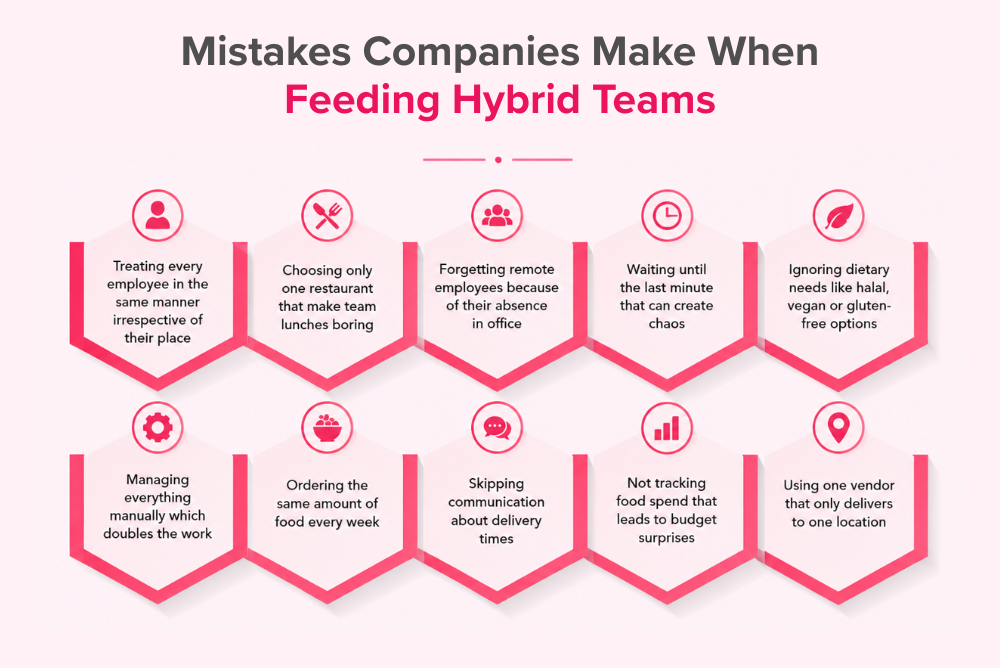
Note: Avoiding these mistakes keeps morale high and budgets under control.
How to Choose Food Delivery Services
Before selecting a corporate food delivery partner, use this simple checklist before placing an order.
- Does the service support both office and remote employees?
- Can employees choose from multiple restaurants?
- Are vegetarian, vegan, halal and gluten-free options available?
- Is there one invoice for all company orders?
- Can recurring weekly or monthly orders be scheduled?
- Does the provider serve your office locations across Toronto as well as the GTA?
- Is group ordering available for every occasion?
- Can the provider handle both small meetings & large corporate events?
- Is pricing clear with no hidden fees?
- Do they provide real-time delivery tracking?
- Is customer support easy to reach?
If you check most of these boxes and you are all ready with all these things, then you are on the right track.
Why Nüu Catering Is Built for Hybrid Workplace Dining
Managing food for a hybrid workforce requires more than a standard delivery app. They need a catering partner that is reliable, flexible and designed for workplace dining. This is where Nüu Catering helps.
With a curated network of restaurant partners across Toronto and the Greater Toronto Area such as Ramona’s Kitchen, Taco Taco, Union Chicken, Lambretta Pizzeria, Osmow’s Shawarma and many more. It is easier for companies to order meals for office lunches, client meetings, training sessions and employee events.
Our orders arrive hot, fresh and on time with live tracking from kitchen to desk. This matters a lot on a hot summer afternoon when nobody wants a soggy sandwich. We also support group ordering, where one person starts the order, the whole team picks their own meal and everything comes together as one delivery and one invoice.
Key Takeaway
- Hybrid work has changed how Canadian businesses plan employee meals.
- Flexible food delivery services for remote hybrid teams in Canada help keep office & remote employees equally engaged.
- Companies can feed distributed teams through group ordering, meal stipends, recurring lunches and virtual meal programs.
- Choosing the right stipend model depends on your team size, work schedule and budget.
- Centralized ordering and billing reduce administrative work while improving the employee experience.
- A trusted corporate catering partner can make workplace dining easier, more flexible, and more enjoyable.
Explore Nüu Catering’s Corporate Catering and Nüu Delivery services to simplify food ordering for your remote and hybrid teams across Toronto and the GTA.
Frequently Asked Questions
Q1. Can one food delivery provider support both office and remote employees?
Many corporate catering providers offer office lunches, virtual meetings and home deliveries through one centralized platform. This helps businesses manage food programs more efficiently.
Q2. What are the benefits of food delivery services for remote & hybrid teams in Canada in 2026?
Food delivery improves employee engagement by supporting team collaboration, simplifying meal planning and reducing administrative work. It also provides benefits to employees working from different locations.
Q3. Can food delivery improve employee engagement in hybrid workplaces?
Yes, shared meals encourage team interaction that makes virtual meetings more engaging and help remote employees feel connected to the company. Even simple initiatives like monthly team lunches can strengthen workplace culture.